Why Most HSA Holders Leave Money on the Table
Health Savings Accounts are one of the most powerful tax-advantaged tools available. Yet the average HSA holder only uses their account for a fraction of eligible expenses. The IRS defines a broad range of qualified medical expenses under Section 213(d). The list is far longer than most people realize.
If you have an HSA and only use it for doctor copays and prescriptions, you are missing out. Let us walk through every major category.
Quick Reference: HSA Eligibility at a Glance
| Item | HSA-Eligible? | Notes |
|---|---|---|
| Doctor visits and copays | Yes | All licensed medical providers |
| Prescription medications | Yes | All prescribed drugs |
| OTC medications (ibuprofen, allergy pills) | Yes | No prescription needed since 2020 |
| Sunscreen (SPF 15+) | Yes | Must be SPF 15 or higher |
| Contact lenses and solution | Yes | Prescription and non-prescription |
| Menstrual products | Yes | Tampons, pads, cups |
| Therapy and counseling | Yes | Licensed mental health providers |
| LASIK eye surgery | Yes | Fully eligible |
| Acupuncture | Yes | When provided by licensed practitioner |
| Gym membership | No | Unless prescribed for a specific condition |
| Teeth whitening | No | Considered cosmetic |
| General vitamins | No | Unless treating a diagnosed deficiency |
| Cosmetic surgery | No | Unless medically necessary |
| Health insurance premiums | No | Few exceptions (COBRA, Medicare) |
| Hair loss treatment | Sometimes | Only if treating a medical condition |
| Weight loss program | Sometimes | Requires doctor diagnosis of obesity |
Doctor visits and copays
- HSA-Eligible?
- Yes
- Notes
- All licensed medical providers
Prescription medications
- HSA-Eligible?
- Yes
- Notes
- All prescribed drugs
OTC medications (ibuprofen, allergy pills)
- HSA-Eligible?
- Yes
- Notes
- No prescription needed since 2020
Sunscreen (SPF 15+)
- HSA-Eligible?
- Yes
- Notes
- Must be SPF 15 or higher
Contact lenses and solution
- HSA-Eligible?
- Yes
- Notes
- Prescription and non-prescription
Menstrual products
- HSA-Eligible?
- Yes
- Notes
- Tampons, pads, cups
Therapy and counseling
- HSA-Eligible?
- Yes
- Notes
- Licensed mental health providers
LASIK eye surgery
- HSA-Eligible?
- Yes
- Notes
- Fully eligible
Acupuncture
- HSA-Eligible?
- Yes
- Notes
- When provided by licensed practitioner
Gym membership
- HSA-Eligible?
- No
- Notes
- Unless prescribed for a specific condition
Teeth whitening
- HSA-Eligible?
- No
- Notes
- Considered cosmetic
General vitamins
- HSA-Eligible?
- No
- Notes
- Unless treating a diagnosed deficiency
Cosmetic surgery
- HSA-Eligible?
- No
- Notes
- Unless medically necessary
Health insurance premiums
- HSA-Eligible?
- No
- Notes
- Few exceptions (COBRA, Medicare)
Hair loss treatment
- HSA-Eligible?
- Sometimes
- Notes
- Only if treating a medical condition
Weight loss program
- HSA-Eligible?
- Sometimes
- Notes
- Requires doctor diagnosis of obesity
Doctor Visits and Hospital Care
This is the category most people already know. Any visit to a licensed medical professional qualifies, including:
- ●Primary care visits:annual physicals, sick visits, specialist referrals
- ●Specialist appointments:dermatologists, cardiologists, endocrinologists, and more
- ●Hospital stays:inpatient and outpatient procedures, emergency room visits
- ●Surgery costs:both the surgeon's fees and facility fees
- ●Lab work and diagnostics:blood tests, MRIs, X-rays, CT scans, ultrasounds
- ●Ambulance services:emergency transport when medically necessary
The key rule is that the expense must be for the diagnosis, cure, mitigation, treatment, or prevention of disease. Cosmetic procedures generally do not qualify unless they address a medical condition.
Prescription Medications
All prescription drugs prescribed by a licensed provider are eligible. This includes:
- ●Chronic condition medications:blood pressure, cholesterol, diabetes, thyroid
- ●Antibiotics and antivirals:for infections and illnesses
- ●Mental health medications:antidepressants, anti-anxiety, ADHD medications
- ●Specialty medications:biologics, injectables, compounded prescriptions
- ●Prescription eye drops:for glaucoma, dry eye, and other conditions
Since the CARES Act of 2020, you no longer need a prescription for many over-the-counter medications to be HSA-eligible. This was a major expansion that many HSA holders still do not know about.
Over-the-Counter Medications and Products
Thanks to the CARES Act, a wide range of OTC products now qualify without a prescription:
- ●Pain relievers:ibuprofen, acetaminophen, aspirin, naproxen
- ●Allergy medications:antihistamines, nasal sprays, eye drops
- ●Cold and flu remedies:cough suppressants, decongestants, throat lozenges
- ●Digestive health:antacids, anti-diarrheal, laxatives, fiber supplements
- ●First aid supplies:bandages, antiseptic, gauze, medical tape, thermometers
- ●Menstrual products:tampons, pads, menstrual cups, liners
- ●Sunscreen:SPF 15 or higher (yes, really)
- ●[Acne treatments](/hsa-eligible/acne-treatment):benzoyl peroxide, salicylic acid products
- ●Baby health:infant pain relievers, diaper rash cream, saline drops. Having a baby? See our HSA game plan for new parents.
This single change made HSA accounts significantly more useful for everyday health spending. Many people buy these products regularly without realizing they could be paying with tax-free dollars. For the full story on what changed, read how the CARES Act expanded HSA-eligible OTC items. You can also find the best HSA-eligible items on Amazon.
Dental Care
Dental expenses are fully eligible, and they add up fast. For a detailed breakdown, see our guide to HSA-eligible dental and vision expenses.
- ●Preventive care:cleanings, exams, X-rays, fluoride treatments
- ●Restorative work:fillings, crowns, bridges, root canals
- ●Orthodontics:braces, retainers, Invisalign (when medically necessary)
- ●Oral surgery:wisdom teeth extraction, dental implants
- ●Dentures:full and partial dentures, repairs and adjustments
- ●Periodontal treatment:deep cleanings, gum surgery
Cosmetic dentistry like teeth whitening generally does not qualify. However, veneers or bonding to repair damaged teeth may be eligible if the primary purpose is restorative.
Vision Care
Vision expenses are another area where HSA dollars stretch further than most people think:
- ●Eye exams:routine and medical eye exams
- ●Prescription glasses:frames and lenses, including progressive lenses
- ●Contact lenses:lenses and contact lens solution
- ●Prescription sunglasses:a popular one people miss
- ●LASIK and PRK:laser eye surgery is fully eligible
- ●Reading glasses:even non-prescription readers qualify
If you wear glasses or contacts, paying with your HSA instead of after-tax dollars can save you hundreds of dollars per year in taxes.
Mental Health and Therapy
Mental health care is fully HSA-eligible and increasingly important. We wrote a full guide on using your HSA for therapy and mental health.
- ●Therapy sessions:psychologists, licensed counselors, social workers
- ●Psychiatrist visits:evaluation and medication management
- ●Substance abuse treatment:inpatient and outpatient programs
- ●Smoking cessation programs:including nicotine patches and gum
The growing recognition of mental health's importance means more people are accessing these services. Using your HSA to pay for therapy can make regular sessions more affordable.
Alternative and Preventive Treatments
This is where it gets interesting. Many alternative treatments qualify if they are for a medical condition:
- ●Acupuncture:when performed by a licensed practitioner
- ●[Chiropractic care](/hsa-eligible/chiropractor):adjustments and related treatment
- ●Physical therapy:post-injury or post-surgery rehabilitation
- ●Occupational therapy:for medical conditions affecting daily function
- ●Speech therapy:for diagnosed speech or language disorders
Some items in this category require a Letter of Medical Necessity (LMN) from your doctor. If you are unsure, ask your provider to write one.
Expenses Most People Miss
Here are some commonly overlooked HSA-eligible expenses:
- ●Breast pumps and supplies:for nursing mothers
- ●Blood pressure monitors:home monitoring devices
- ●CPAP machines and supplies:for sleep apnea
- ●Hearing aids and batteries:a major expense that qualifies
- ●Wheelchair and mobility aids:walkers, canes, crutches
- ●Medical travel costs:mileage to and from medical appointments (at the IRS medical mileage rate)
- ●Long-term care insurance premiums:up to age-based limits
- ●Medicare premiums:Parts A, B, and D (if you are 65 or older)
- ●Genetic testing:including carrier screening and diagnostic tests
- ●Service animal costs:food, training, and veterinary care for guide dogs and other service animals
What Does NOT Qualify
To avoid surprises, here are common expenses that are not HSA-eligible:
- ●Gym memberships:unless prescribed for a specific medical condition with an LMN
- ●Cosmetic surgery:unless it corrects a deformity from illness, injury, or congenital abnormality
- ●General vitamins and supplements:unless prescribed to treat a diagnosed deficiency
- ●Teeth whitening:purely cosmetic
- ●Health insurance premiums:with exceptions for COBRA, long-term care, and Medicare
- ●Toiletries and personal care:even if they have health benefits
How to Maximize Your HSA Spending
Now that you know what qualifies, here are three strategies to get the most out of your HSA:
1. Save your receipts for everything. Even if you choose to pay out of pocket now and reimburse yourself later, having documentation is essential.
2. Check before you buy. When you are at the pharmacy or shopping online, take a moment to see if the item is HSA-eligible. Many retailers now mark eligible items.
3. Use your HSA for big-ticket items. LASIK, orthodontics, and hearing aids can cost thousands. Paying with pre-tax HSA dollars means significant savings.
Your HSA is more versatile than you think. The key is knowing what qualifies and building the habit of using it for every eligible purchase.
Start Tracking These Expenses
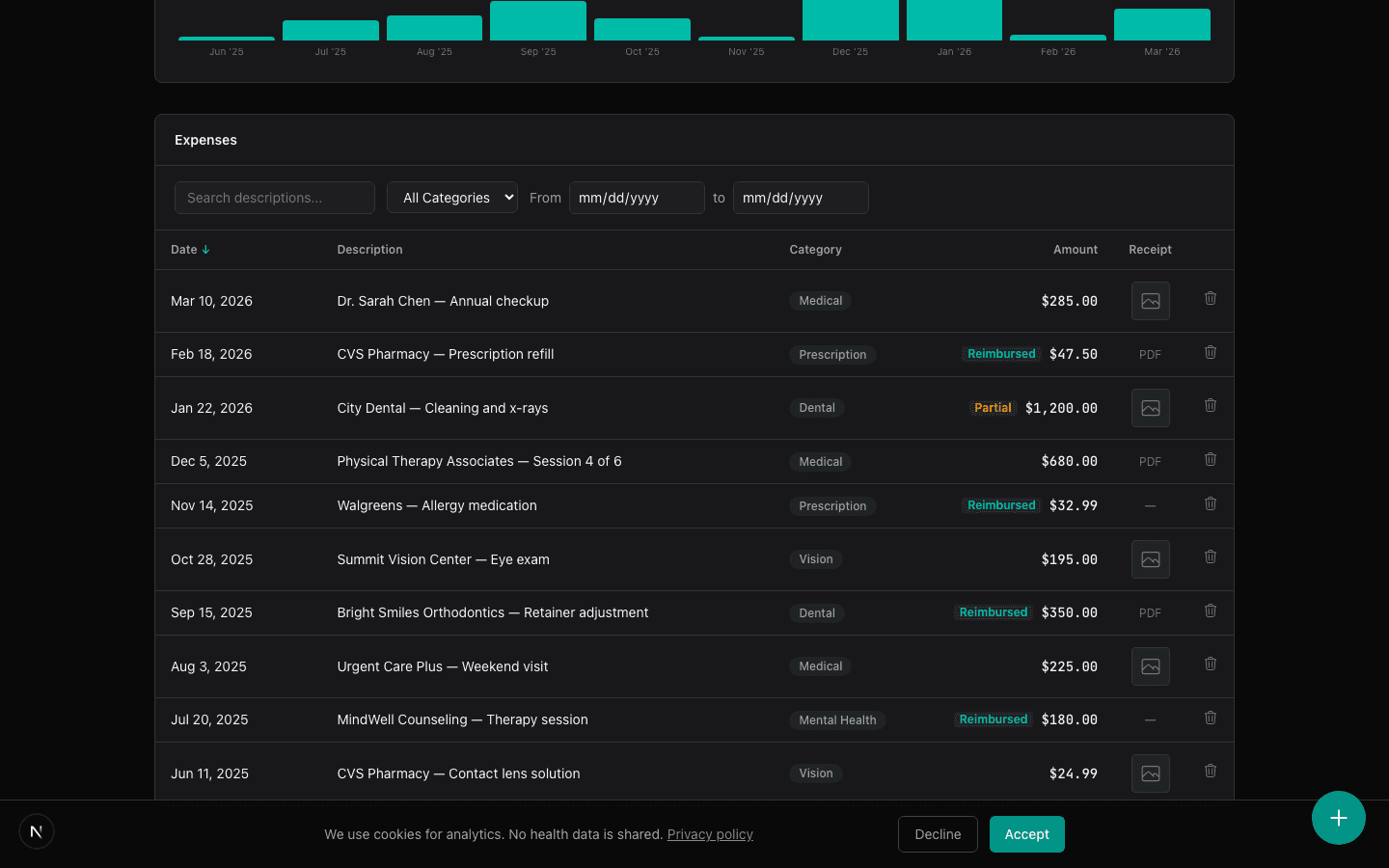
Now that you know what qualifies, the next step is tracking it. Tripl parses your receipts with AI and categorizes each expense automatically. Every purchase is logged with a reimbursement record you can export at tax time. Snap a photo or forward an email. 10 seconds per receipt.
*This is educational content, not financial or tax advice. Consult a qualified professional before making decisions about your HSA.*