Dental and Vision Add Up Fast
A single dental crown costs $1,000 to $3,000. LASIK runs $4,000 to $6,000 for both eyes. Annual contacts and solution cost $300 to $700. Braces for your kid? $3,000 to $7,000.
These are real numbers from real bills. And every one of them is HSA-eligible.
Dental and vision expenses are some of the biggest line items your HSA can cover. Most people know about copays and prescriptions. Fewer realize their HSA handles the $5,000 LASIK bill or the $4,500 set of braces.
Dental Expenses: The Full List
What Qualifies
| Dental Expense | HSA-Eligible? | Typical Cost |
|---|---|---|
| Cleanings and exams | Yes | $100-$300/visit |
| X-rays | Yes | $25-$250 |
| Fillings | Yes | $150-$400 per tooth |
| Crowns | Yes | $1,000-$3,000 per tooth |
| Root canals | Yes | $700-$1,500 per tooth |
| Braces/Invisalign | Yes | $3,000-$7,000 |
| Retainers | Yes | $100-$500 |
| Dental implants | Yes | $3,000-$5,000 per tooth |
| Wisdom teeth extraction | Yes | $200-$600 per tooth |
| Periodontal treatment | Yes | $500-$4,000 |
| Dentures | Yes | $1,000-$3,000 |
| Dental anesthesia | Yes | $200-$700 |
| Night guards (prescribed) | Yes | $300-$1,000 |
Cleanings and exams
- HSA-Eligible?
- Yes
- Typical Cost
- $100-$300/visit
X-rays
- HSA-Eligible?
- Yes
- Typical Cost
- $25-$250
Fillings
- HSA-Eligible?
- Yes
- Typical Cost
- $150-$400 per tooth
Crowns
- HSA-Eligible?
- Yes
- Typical Cost
- $1,000-$3,000 per tooth
Root canals
- HSA-Eligible?
- Yes
- Typical Cost
- $700-$1,500 per tooth
Braces/Invisalign
- HSA-Eligible?
- Yes
- Typical Cost
- $3,000-$7,000
Retainers
- HSA-Eligible?
- Yes
- Typical Cost
- $100-$500
Dental implants
- HSA-Eligible?
- Yes
- Typical Cost
- $3,000-$5,000 per tooth
Wisdom teeth extraction
- HSA-Eligible?
- Yes
- Typical Cost
- $200-$600 per tooth
Periodontal treatment
- HSA-Eligible?
- Yes
- Typical Cost
- $500-$4,000
Dentures
- HSA-Eligible?
- Yes
- Typical Cost
- $1,000-$3,000
Dental anesthesia
- HSA-Eligible?
- Yes
- Typical Cost
- $200-$700
Night guards (prescribed)
- HSA-Eligible?
- Yes
- Typical Cost
- $300-$1,000
What Does NOT Qualify
- ●Teeth whitening. Purely cosmetic. No exceptions.
- ●Cosmetic veneers. If the primary purpose is appearance, not repair. Veneers to fix a chipped or broken tooth may qualify.
- ●Cosmetic bonding. Same rule as veneers. Functional repair qualifies. Appearance-only does not.
- ●Electric toothbrushes. Not a medical device. (Some people try this one. It does not work.)
The Braces Question
Braces and Invisalign are fully HSA-eligible when they are treating a medical condition. Malocclusion (misaligned bite), overcrowding, and jaw alignment issues all qualify. Your orthodontist documents the medical necessity as part of the treatment plan.
A family spending $5,000 on braces saves $1,250 to $1,850 in taxes by paying through their HSA. The exact savings depends on your bracket. That is real money back in your pocket.
Vision Expenses: The Full List
What Qualifies
| Vision Expense | HSA-Eligible? | Typical Cost |
|---|---|---|
| Eye exams | Yes | $100-$250 |
| Prescription glasses | Yes | $100-$600 |
| Contact lenses | Yes | $150-$500/year |
| Contact lens solution | Yes | $50-$150/year |
| Prescription sunglasses | Yes | $150-$500 |
| Reading glasses (any) | Yes | $10-$50 |
| LASIK surgery | Yes | $4,000-$6,000 |
| PRK surgery | Yes | $4,000-$6,000 |
| Lens coatings (anti-glare) | Yes | $20-$150 |
Eye exams
- HSA-Eligible?
- Yes
- Typical Cost
- $100-$250
Prescription glasses
- HSA-Eligible?
- Yes
- Typical Cost
- $100-$600
Contact lenses
- HSA-Eligible?
- Yes
- Typical Cost
- $150-$500/year
Contact lens solution
- HSA-Eligible?
- Yes
- Typical Cost
- $50-$150/year
Prescription sunglasses
- HSA-Eligible?
- Yes
- Typical Cost
- $150-$500
Reading glasses (any)
- HSA-Eligible?
- Yes
- Typical Cost
- $10-$50
LASIK surgery
- HSA-Eligible?
- Yes
- Typical Cost
- $4,000-$6,000
PRK surgery
- HSA-Eligible?
- Yes
- Typical Cost
- $4,000-$6,000
Lens coatings (anti-glare)
- HSA-Eligible?
- Yes
- Typical Cost
- $20-$150
What Does NOT Qualify
- ●Non-prescription sunglasses. Even with UV protection, they are not a medical device.
- ●Blue light glasses without a prescription. Cosmetic, not medical.
- ●Eye cream and cosmetic products. Not a medical expense.
The Reading Glasses Surprise
Here is one most people miss. Over-the-counter reading glasses from the drugstore are HSA-eligible. Even without a prescription. A $15 pair of readers from CVS qualifies.
The IRS considers reading glasses a medical device because they correct a vision condition (presbyopia). You do not need a prescription. You do not need to buy them from an optician. The $12 pair from Amazon counts.
If you are over 40 and buying readers regularly, start paying with your HSA.
LASIK: The Big One
LASIK is one of the largest single HSA expenses people use. At $4,000 to $6,000 for both eyes, the tax savings are significant.
At a 25% combined tax rate, $5,000 in LASIK through your HSA saves you $1,250 in taxes. At a 32% bracket, that is $1,600.
If you have been building your HSA balance, LASIK is a perfect use case. You can also use the delayed reimbursement strategy. Pay for LASIK with a credit card (earn the points). Save the receipt. Reimburse from your HSA whenever you want.
Some people time their LASIK for a year when they have a high HSA balance. Others spread the reimbursement across tax years. Both approaches work.
The Limited-Purpose FSA Combo
If your employer offers a Limited-Purpose FSA (LPFSA), you can pair it with your HSA for extra tax savings on dental and vision.
A regular FSA and an HSA cannot coexist. But a Limited-Purpose FSA only covers dental and vision expenses, so the IRS allows it alongside an HSA.
How it works:
- ●Contribute to your HSA for medical expenses (up to $4,400 individual or $8,750 family)
- ●Contribute to a LPFSA for dental and vision (up to $3,400 for 2026)
- ●Use the LPFSA first for dental and vision expenses
- ●Use the HSA for everything else
This gives you up to $12,050 in tax-advantaged health spending per year for a family. That is $3,012 in tax savings at a 25% bracket.
The catch: LPFSA funds are use-it-or-lose-it (some plans allow a $680 rollover for 2026). Only contribute what you expect to spend on dental and vision that year.
Check if your employer offers this during open enrollment. Many do, but employees do not know about it. It is not the same as a regular FSA. You need to look for "limited purpose" specifically.
Read more about how HSAs and FSAs work together in our comparison guide.
Annual Family Dental + Vision Costs
Here is what a typical family of four spends on dental and vision per year:
| Expense | Annual Cost |
|---|---|
| 4 dental cleanings (2 per person, 2 visits/year) | $800-$2,400 |
| 1 filling | $150-$400 |
| Contacts or glasses for 1-2 family members | $300-$1,000 |
| Contact solution | $50-$150 |
| 1 eye exam | $100-$250 |
| Total | $1,400-$4,200 |
At a 25% tax rate, running $3,000 of dental and vision through your HSA saves $750/year. Over 10 years, that is $7,500 in tax savings. Not counting investment growth if you use the reimbursement strategy.
These are expenses you are going to have anyway. The only question is whether you pay with pre-tax or after-tax dollars.
Tracking Dental and Vision Receipts
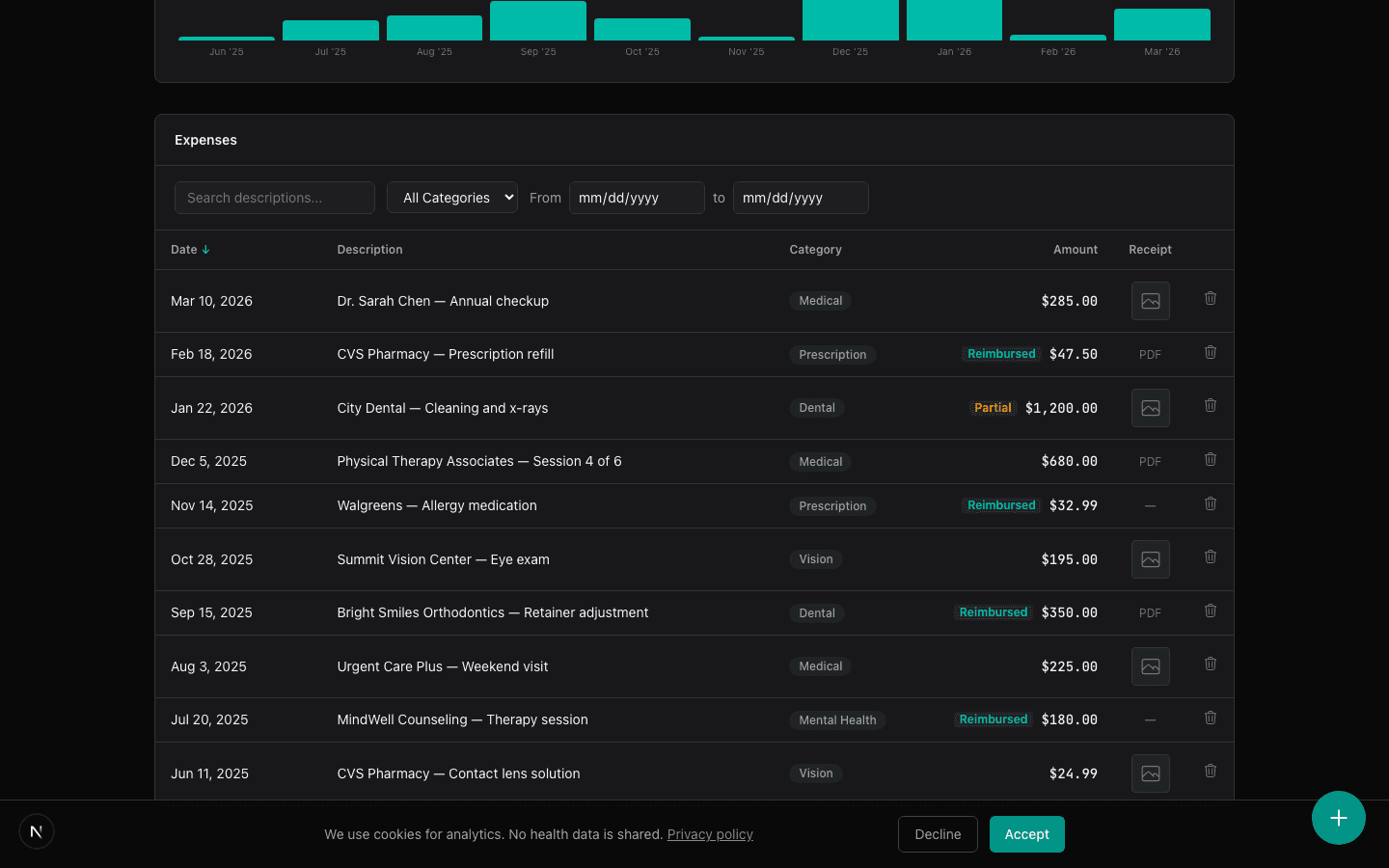
Dental and vision expenses are easy to document. Your dentist and optometrist send itemized receipts. Your insurance company sends EOBs. Save both.
For the full list of HSA-eligible expenses across all categories, check our complete guide.
Frequently Asked Questions
Are Invisalign clear aligners HSA-eligible?
Yes. Invisalign and other clear aligner systems are treated the same as traditional braces. They must be prescribed by an orthodontist or dentist to treat a medical condition like malocclusion. The full cost of treatment is eligible, including office visits and retainers.
Can I use my HSA for my child's glasses?
Yes. Your HSA covers qualified medical expenses for your spouse and tax dependents. Children's glasses, contacts, eye exams, and vision therapy all qualify.
Is laser eye surgery besides LASIK also covered?
Yes. PRK, SMILE, and other corrective eye surgeries are HSA-eligible. Any surgery that corrects a vision condition qualifies. Cosmetic eye procedures (like eyelid lifts for appearance) do not.
Does my dental insurance affect HSA eligibility?
No. Your HSA covers the out-of-pocket portion of any qualified dental expense, regardless of your insurance coverage. If your insurance pays 80% and you owe 20%, you can use your HSA for your 20% share.
*This is educational content, not financial or tax advice. Consult a qualified professional before making decisions about your HSA.*