You Missed a Major Policy Change. Here Is the Play.
In March 2020, the world was paying attention to one thing. Understandably so. But while everyone was focused on lockdowns and stimulus checks, a provision buried inside the CARES Act rewrote the rules for Health Savings Accounts.
The change was simple. Before the CARES Act, over-the-counter medications were only HSA-eligible if a doctor wrote you a prescription for them. Ibuprofen? Not eligible unless your doctor prescribed it. Allergy pills? Same deal. The rule had been in place since 2011 under the Affordable Care Act, and most people just accepted it.
The CARES Act reversed that entirely. As of January 1, 2020, all over-the-counter medications and health products became HSA-eligible. No prescription required.
That is not a minor tweak. That is a fundamental shift in how useful your HSA is on a daily basis.
Before vs After the CARES Act
| Category | Before 2020 | After CARES Act |
|---|---|---|
| OTC pain relievers (ibuprofen, aspirin) | Prescription required | Eligible, no Rx needed |
| Allergy medications (Claritin, Zyrtec) | Prescription required | Eligible, no Rx needed |
| Cold and flu treatments (DayQuil, NyQuil) | Prescription required | Eligible, no Rx needed |
| Digestive aids (Tums, Pepto-Bismol) | Prescription required | Eligible, no Rx needed |
| Menstrual products (tampons, pads, cups) | Not eligible | Eligible |
| Sunscreen (SPF 15+) | Already eligible | Eligible (no change) |
| First aid supplies (bandages, gauze) | Already eligible | Eligible (no change) |
| Prescription drugs | Already eligible | Eligible (no change) |
| Gym memberships | Not eligible | Not eligible (no change) |
| Cosmetic procedures | Not eligible | Not eligible (no change) |
The biggest change: OTC medications no longer need a prescription. This single rule shift made dozens of everyday drugstore purchases HSA-eligible.
What Actually Changed
Before 2020, your HSA was mostly a tool for big-ticket medical events. Doctor visits, prescriptions, dental work, surgeries. The stuff you plan for (or at least expect).
Now? Your HSA covers the products you buy every single week at the pharmacy, the grocery store, even Target. Here is what became eligible:
Over-the-counter medications (no prescription needed):
- ●Pain relievers: ibuprofen, acetaminophen, aspirin, naproxen
- ●Allergy medications: Claritin, Zyrtec, Benadryl, Flonase
- ●Cold and flu treatments: DayQuil, NyQuil, cough drops, decongestants
- ●Digestive aids: Tums, Pepto-Bismol, Imodium, Gas-X
- ●Sleep aids: melatonin, Unisom, ZzzQuil
- ●Acid reflux treatments: Prilosec, Nexium, Pepcid
Menstrual products (newly eligible under the CARES Act):
- ●Tampons
- ●Pads
- ●Menstrual cups
- ●Liners
First aid and health essentials:
- ●Bandages, gauze, and medical tape
- ●Antiseptic wipes and sprays
- ●Thermometers
- ●Sunscreen (SPF 15+)
- ●Acne treatments
- ●Baby health products like saline drops and diaper rash cream
This is not a niche list. These are products most households buy on a regular basis.
The Numbers Tell the Story
Here is where this gets strategic.
The average American household spends between $30 and $50 per month on over-the-counter health products. Allergy pills through spring and summer. Cold medicine in the winter. Sunscreen for the whole family. Pain relievers after a tough workout. Menstrual products every month.
At $40/month, that is $480 per year.
If you are in the 24% federal tax bracket (plus state taxes), paying for those products with pre-tax HSA dollars saves you roughly $140 to $170 per year. That is real money for doing nothing differently except swiping a different card.
Now extend it. Over ten years, you have saved $1,400 to $1,700 in taxes on products you were already buying. If you invest those savings inside your HSA instead of spending them, the compounding makes the gap even wider.
And this is just the OTC category. Stack it on top of your existing HSA-eligible expenses (doctor visits, dental, vision, prescriptions), and you start to see why the CARES Act was such a big deal.
Why Most People Still Do Not Know
Six years later, awareness is still low. A 2023 survey from the Employee Benefit Research Institute found that a significant percentage of HSA holders do not fully understand what their accounts cover. The CARES Act expansion is one of the most commonly missed changes.
There are two reasons for this. First, nobody was paying attention to HSA policy in March 2020. Second, the IRS does not exactly send you a push notification when the rules change. Your HSA provider probably updated their FAQ page somewhere. You probably did not read it.
That means you have likely been paying after-tax dollars for eligible products for years. Not because the rules prevented you from using your HSA. Just because you did not know the rules had changed.
The Strategic Move
Here is what I want you to do this week.
Step 1: Audit your recent pharmacy purchases. Go through your last three months of receipts or credit card statements. Identify every OTC medication, first aid product, sunscreen purchase, and menstrual product.
Step 2: Start buying these with your HSA. If your HSA has a debit card, use it at the register. If you are using the reimbursement strategy (paying out of pocket and letting your HSA grow), save those receipts and add them to your reimbursement pile.
Step 3: Build it into your routine. The pharmacy run is now an HSA event. Treat it that way. Every eligible product you buy with pre-tax dollars is money back in your pocket.
This is not about changing your spending habits. You are already buying this stuff. The only change is which account pays for it.
What Happens If You Ignore This
Every month you pay for OTC medications and health products with after-tax dollars, you are voluntarily paying more than you need to. That is the blunt truth. The IRS gave you a tax break on these purchases six years ago, and if you are not using it, you are leaving money on the table.
Over a decade, that adds up to over a thousand dollars in unnecessary taxes. For a family with higher OTC spending (kids get sick a lot), the number could be double that.
There is no reason to leave it sitting there.
The Bigger Picture
The CARES Act expansion is not just about saving a few dollars on Tylenol. It is about rethinking what your HSA is for.
Your HSA is not just a medical savings account for emergencies and doctor visits. It is a tax-advantaged tool that covers a huge portion of your everyday health spending. The more eligible expenses you run through it, the more tax-free dollars you keep.
The play is simple. Know what is eligible. Use your HSA for everything that qualifies. Let the tax savings grow over time.
Most people are playing the HSA game with half the playbook. Now you have the full version. For the complete list across every category, see what you can buy with an HSA.
Track Your OTC Purchases
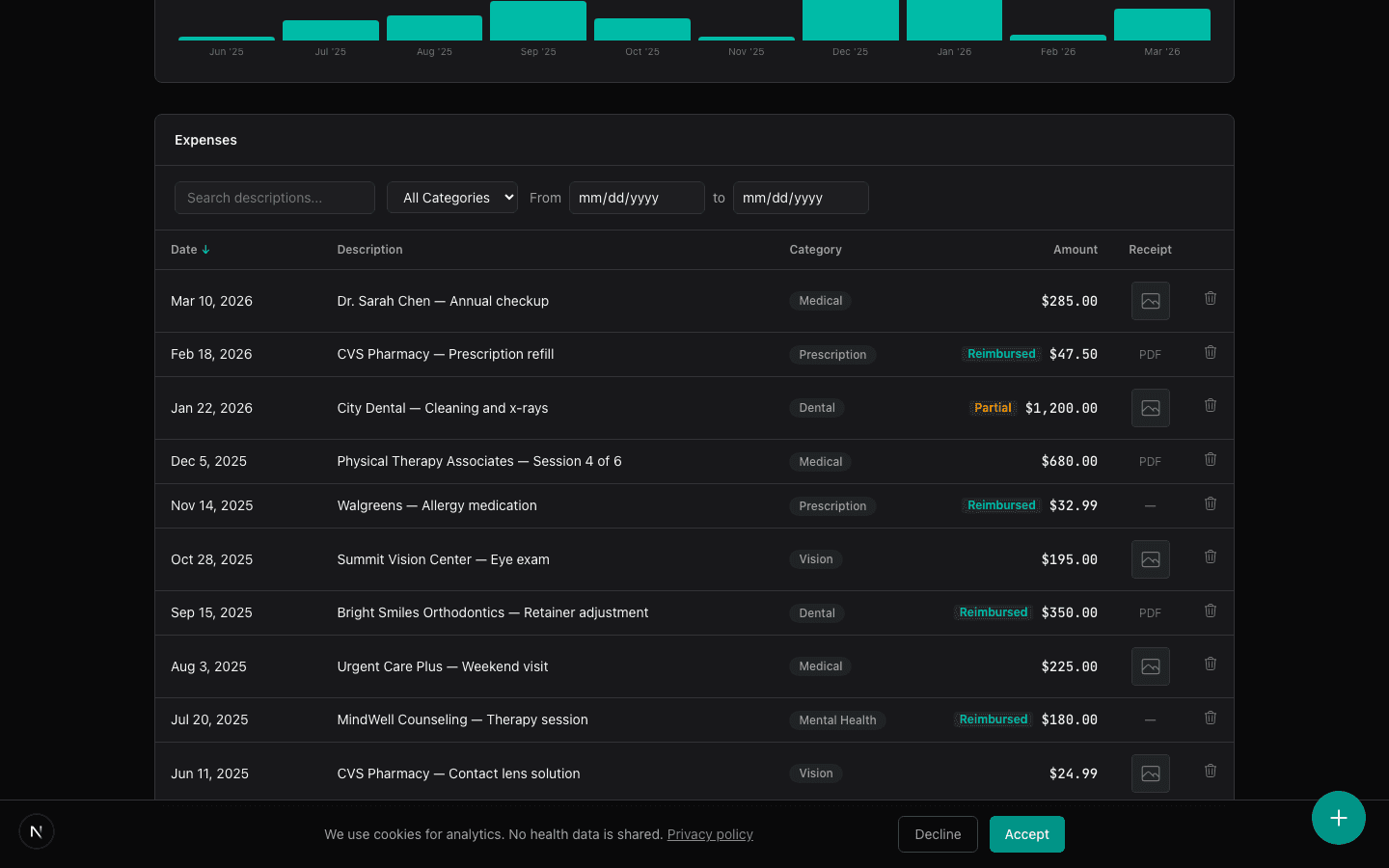
OTC expenses add up fast. $30 a month in allergy meds and sunscreen is $360 a year in tax-free reimbursements. Tripl tracks these purchases alongside your doctor visits and prescriptions. Same receipt flow, same reimbursement record. Everything in one place for tax season.
*This is educational content, not financial or tax advice. Consult a qualified professional before making decisions about your HSA.*