The Question That Changed How I Think About My HSA
A friend asked me a question last month that stopped me cold. "If your car needed a $3,000 repair tomorrow, where would you get the money?"
I started running through the usual answers. Savings account. Credit card. Maybe sell something. Then he said, "What about your HSA?"
I almost laughed. My Health Savings Account? For a car repair? That is not what it is for.
Except. It kind of is.
Wait, What?
Here is the thing I did not understand until embarrassingly recently. If you have been paying medical bills out of pocket and saving those receipts, you are sitting on a pile of tax-free cash. You just have not withdrawn it yet.
The IRS lets you reimburse yourself for old medical expenses at any time. There is no deadline. So that $200 doctor visit from 2023? That $1,400 dental bill from last year? Those are still reimbursable. You can pull that money out of your HSA whenever you want, completely tax-free.
And here is the part that blew my mind: once that reimbursement hits your bank account, you can spend it on literally anything.
A car repair. A vacation. Groceries. A down payment on a house. Whatever you want.
The reimbursement has to be tied to a real medical expense. That is the rule. But the cash itself? It is just cash. The IRS does not care what you do with it after it leaves your HSA.
So Your Receipts Are Basically a Savings Account?
Kind of. Think of it like a sinking fund.
If you are not familiar with the term, a sinking fund is money you set aside for a specific future expense. People use them for car repairs, vacations, holiday gifts, home renovations. You save a little at a time so the big expense does not wreck your budget.
Your unreimbursed HSA receipts work the same way, except better. Because the money in your HSA has been growing tax-free the entire time you have been sitting on those receipts. And when you finally pull it out, you pay zero taxes on the withdrawal.
Try getting that deal from a regular savings account.
Let Me Show You What This Looks Like
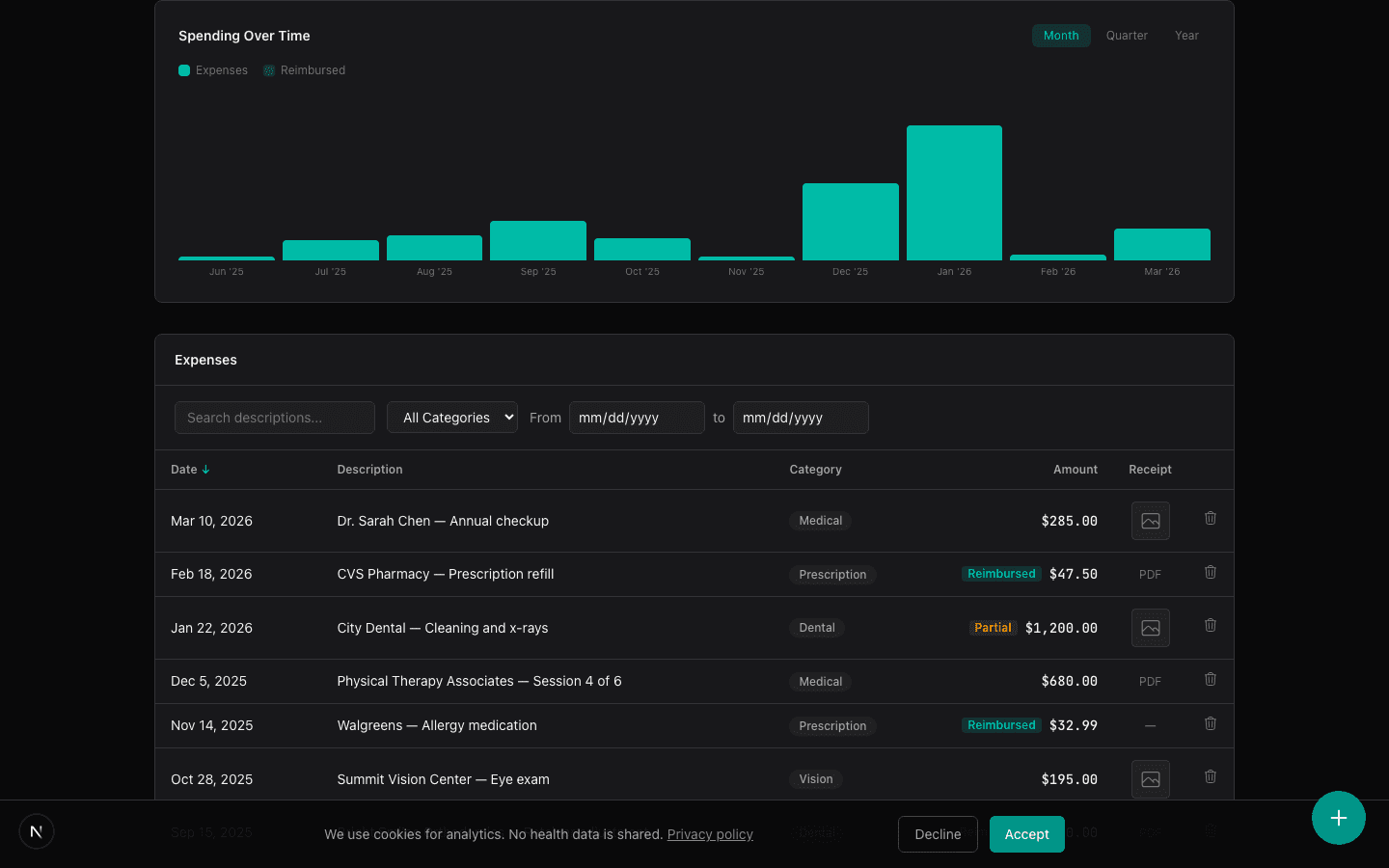
Say you have been tracking medical receipts for three years. Nothing crazy, just normal life. Copays, prescriptions, a couple of dental visits, some physical therapy after tweaking your back.
Your receipt total: $8,400.
That means you can withdraw $8,400 from your HSA right now, tax-free, and spend it on whatever you need. The withdrawal is matched to those old medical expenses. But the cash goes into your checking account and becomes regular money.
Need new tires? Done. Want to book that trip you have been putting off? Covered. Saving for a wedding? Here is a chunk of it, tax-free.
Why This Matters More Than You Think
Most people think of their HSA in one of two ways. Either it is a medical spending account (swipe the card at the doctor's office) or it is a long-term investment account (do not touch it until retirement).
Both of those are fine. But there is a third option hiding in plain sight.
Your HSA can also be a flexible cash reserve that you tap when life gets expensive. Not for medical bills. For everything else.
The trick is that you need receipts to unlock it. No receipts, no reimbursement, no cash. That is why tracking matters so much. Every receipt you save is like adding dollars to a tax-free savings account you can access whenever you want.
The Rules (Because This Is Still the IRS)
Let me be clear about what is and is not allowed here.
What is allowed:
- ●Reimbursing yourself for any qualified medical expense that happened after you opened your HSA
- ●Taking that reimbursement whenever you want (no time limit)
- ●Spending the reimbursed cash on anything
What is not allowed:
- ●Making up fake medical expenses
- ●Reimbursing expenses that happened before your HSA existed
- ●Withdrawing more than your documented medical expenses without paying taxes and penalties
The expense has to be real. The receipt has to be real. But the timing of when you reimburse yourself? Totally up to you. And what you do with the money after? Your call.
If you want the full breakdown of how the reimbursement strategy works, I wrote about it in detail here.
What Happens If You Never Build This Habit
Here is the part that stings. Every medical expense you pay from your HSA card instead of out of pocket is a receipt you will never have. That is money you can never pull back out tax-free for a car, a trip, or an emergency.
And every receipt you lose or forget to save? Same thing. Gone.
I think about all the copays and prescriptions from my twenties that I just swiped my HSA card for without thinking. Hundreds, maybe thousands of dollars in future tax-free cash that I will never get back.
You do not have to make the same mistake.
Start Small, Build the Pile
You do not need a perfect system. You just need a habit.
Next time you pay a medical bill, use your regular credit card instead of your HSA card. Snap a photo of the receipt. Save it somewhere you will not lose it (a folder on your phone, a Google Drive folder, whatever works).
That is it. One receipt at a time.
Over a year, you might stack up $2,000 or $3,000 in reimbursable expenses just from normal life. Doctor visits, prescriptions, that weird rash you finally got checked out. Over five years, that could be $10,000 or more.
$10,000 in tax-free cash you can pull out for anything, whenever you need it.
That is not a medical account. That is a financial superpower disguised as a medical account.
The Answer to My Friend's Question
So. $3,000 car repair, where does the money come from?
I checked my receipt tracker. I had $4,200 in unreimbursed medical expenses from the past two years. I could reimburse myself $3,000 from my HSA tomorrow. Tax-free. No penalties. No paperwork beyond the receipts I had already saved.
My HSA did not just cover my medical bills. It built me a cash reserve I did not even realize I had.
Yours might be doing the same thing. You just need to start keeping the receipts.
*This is educational content, not financial or tax advice. Consult a qualified professional before making decisions about your HSA.*