Two Safety Nets, Two Different Jobs
This is one of the most common questions in personal finance forums: "Should I build my emergency fund or max my HSA first?" The answer is not one or the other. These accounts serve fundamentally different purposes, and understanding the distinction will save you real money.
What Each Account Is Designed For
Emergency fund: 3 to 6 months of living expenses in a high-yield savings account. Covers job loss, car repairs, unexpected bills. Fully liquid, no tax advantages, no investment growth to speak of. Its job is to be boring and available.
HSA: Tax-advantaged account for medical expenses. Can be invested for long-term growth. Triple tax benefit (pre-tax in, tax-free growth, tax-free out for medical). Its job is to build wealth while covering healthcare costs.
The mistake people make is treating the HSA as their emergency fund, or burning their emergency fund on medical bills when they have HSA dollars available. Each account has a lane.
The Numbers: Why Funding Order Matters
Say you have $500 per month to allocate toward savings. Here are three approaches over 10 years:
Approach A: Emergency fund only
- ●$500/month in a high-yield savings account at 4.5% APY
- ●After building a 6-month reserve (~$18,000), redirect remainder to a taxable brokerage
- ●10-year value: ~$72,000
- ●Tax drag on brokerage gains: ~$2,400 at 15% capital gains
- ●Net after taxes: ~$69,600
Approach B: HSA only
- ●$500/month (maxing HSA at $367/month, remainder to taxable brokerage)
- ●HSA portion grows tax-free at 7%
- ●No cash cushion for non-medical emergencies
- ●10-year value: ~$73,000 on paper
- ●But you are exposed to a $5,000 car repair with no liquid backup
- ●Net: ~$73,000, but high risk
Approach C: Both, sequenced properly
- ●First 10 months: build a $5,000 starter emergency fund
- ●Month 11 onward: $367/month to HSA (max) + $133/month to finish emergency fund
- ●Emergency fund complete around month 20
- ●HSA maxed every year from month 11 forward
- ●After emergency fund is done, redirect $142/month to brokerage
- ●Net: ~$71,500 with zero gap in coverage
Approach C gives you 97% of the upside with none of the risk. That is the right trade.
The Sequencing Framework
Here is the priority order:
Step 1: Starter emergency fund. Get $2,000 to $5,000 in a savings account before anything else. This is your floor.
Step 2: Employer 401(k) match. If your employer matches, contribute enough to get the full match. It is a 100% return on day one.
Step 3: Max your HSA. The triple tax advantage beats every other account for medical dollars. At $4,400/year for individuals, this is $367/month.
Step 4: Finish your emergency fund. Build to 3 to 6 months of expenses in a high-yield savings account. Not invested, not in the market.
Step 5: Max your Roth IRA. $7,500 per year at current limits.
Step 6: Max your 401(k). Fill the remaining space up to $24,500.
Notice the HSA comes before the full emergency fund is done. That is intentional. The tax savings from HSA contributions are immediate and significant. Every month you delay HSA funding costs you real money in lost tax benefits.
When Your HSA Doubles as a Backup
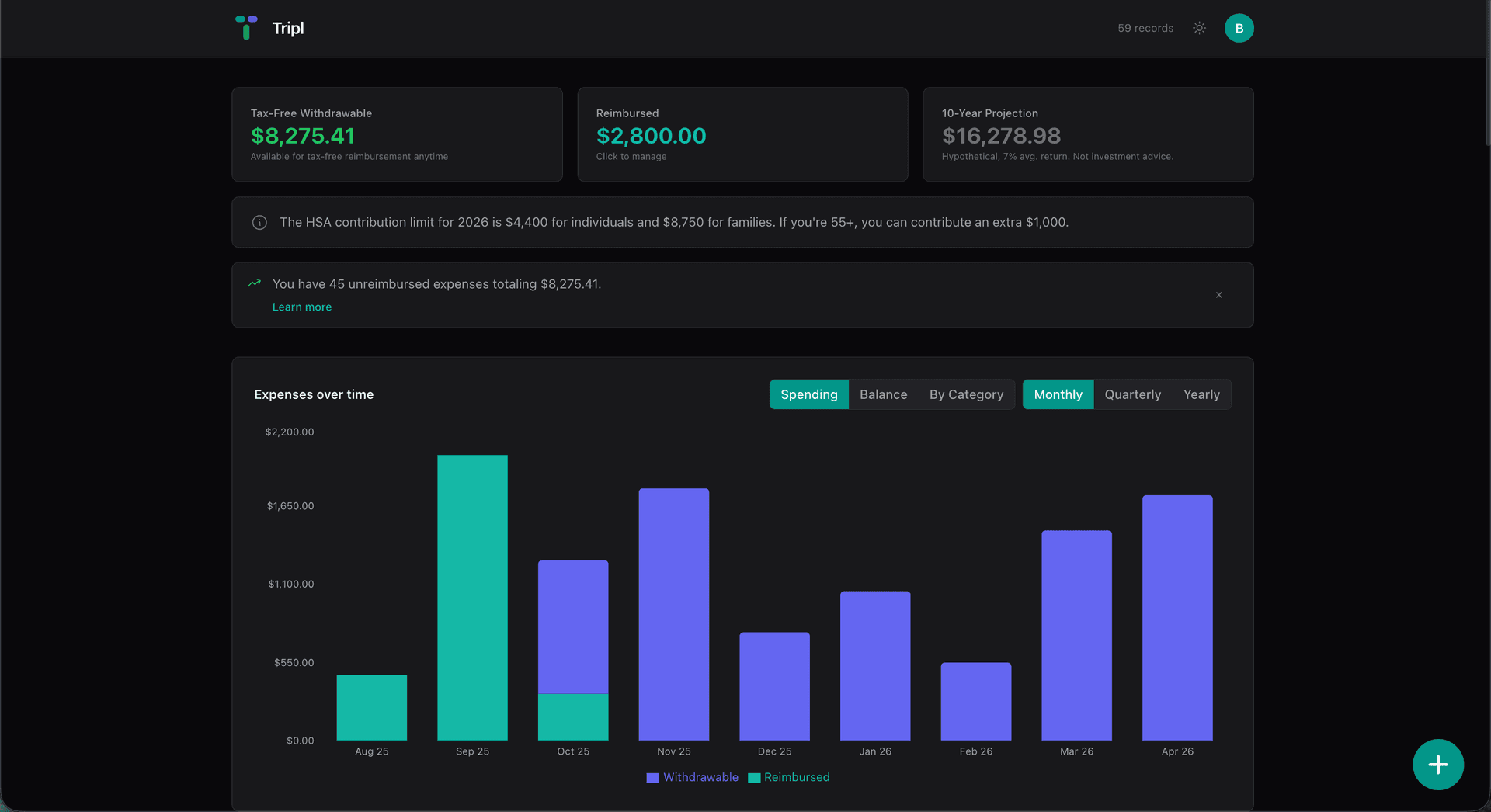
Here is a nuance most advice skips. If you have been tracking receipts and paying out of pocket, your accumulated unreimbursed expenses function as a secondary cash reserve.
Example: you have $12,000 in unreimbursed HSA receipts from the past three years. If you lose your job tomorrow, you can reimburse yourself $12,000 from your HSA. Completely tax-free, no penalties, no strings.
This is not a true emergency fund (you cannot use it for rent or car repairs). But for a cash infusion during a rough stretch, it is a powerful backstop that most people do not realize they have.
The Bottom Line
Build a starter emergency fund first, then max your HSA, then finish the emergency fund. Do not sacrifice one for the other. They solve different problems, and together they create a financial base that handles both unexpected expenses and long-term wealth building.
*This is educational content, not financial or tax advice. Consult a qualified professional before making decisions about your HSA.*