"You Have Three Kids. Why Would You Pick the High-Deductible Plan?"
I get this question a lot. Family of five, three kids under 10, and medical expenses that reliably clear $7,000 every year. Urgent care visits for fevers that spike at 2 AM. Prescription allergy meds that cost more than they should. Dental cleanings twice a year for all five of us. The occasional ER trip that turns a random Tuesday into a $1,200 surprise.
On paper, I look like the last person who should be on an HDHP. Higher deductible, no copays until I hit it, more risk if something big happens.
I picked it anyway. And after running the numbers for two years, I would pick it again every single time.
The Mid-Tier PPO Looks Safe. It Isn't Cheap.
When I compared our options during open enrollment, the mid-tier PPO looked like the responsible family choice. $40 copays for primary care, $60 for specialists, a prescription tier that covers the basics.
But the premium was $380 more per month than the HDHP. That is $4,560 a year just in premium difference, before anyone sees a doctor.
And those copays still add up. Three kids means a lot of $40 visits. We averaged about 15 office visits a year across the family. That is another $600 to $900 in copays that the PPO's "coverage" didn't eliminate. It just restructured the cost.
The HDHP Math, Line by Line
Here is what our actual year looked like on the HDHP:
| HDHP | Mid-tier PPO | |
|---|---|---|
| Annual premiums | $6,240 | $10,800 |
| Out-of-pocket medical spending | $7,100 | $5,400 |
| Total cash out the door | $13,340 | $16,200 |
The HDHP cost us $2,860 less in total, even though we spent more out of pocket on actual medical care. The premium savings were that significant.
But that is just the basic comparison. The real advantage shows up on the next line.
The Tax Savings Nobody Mentions
With the HDHP, we qualify for an HSA. We contributed the family maximum ($8,750 for 2026). At our marginal tax rate (22% federal + 5.75% state + 7.65% FICA), that contribution saved us approximately $3,100 in taxes.
That $3,100 is invisible on every plan comparison sheet your HR department hands out. They compare premiums, deductibles, and copays. They never include the HSA tax benefit. But it is real money.
| HDHP | Mid-tier PPO | |
|---|---|---|
| Total cash out the door | $13,340 | $16,200 |
| HSA tax savings | -$3,100 | $0 |
| Net cost | $10,240 | $16,200 |
The HDHP saved us $5,960 compared to the PPO. In one year.
The Part That Makes It Unfair
Everything above assumes we spent the HSA money on this year's bills. We didn't.
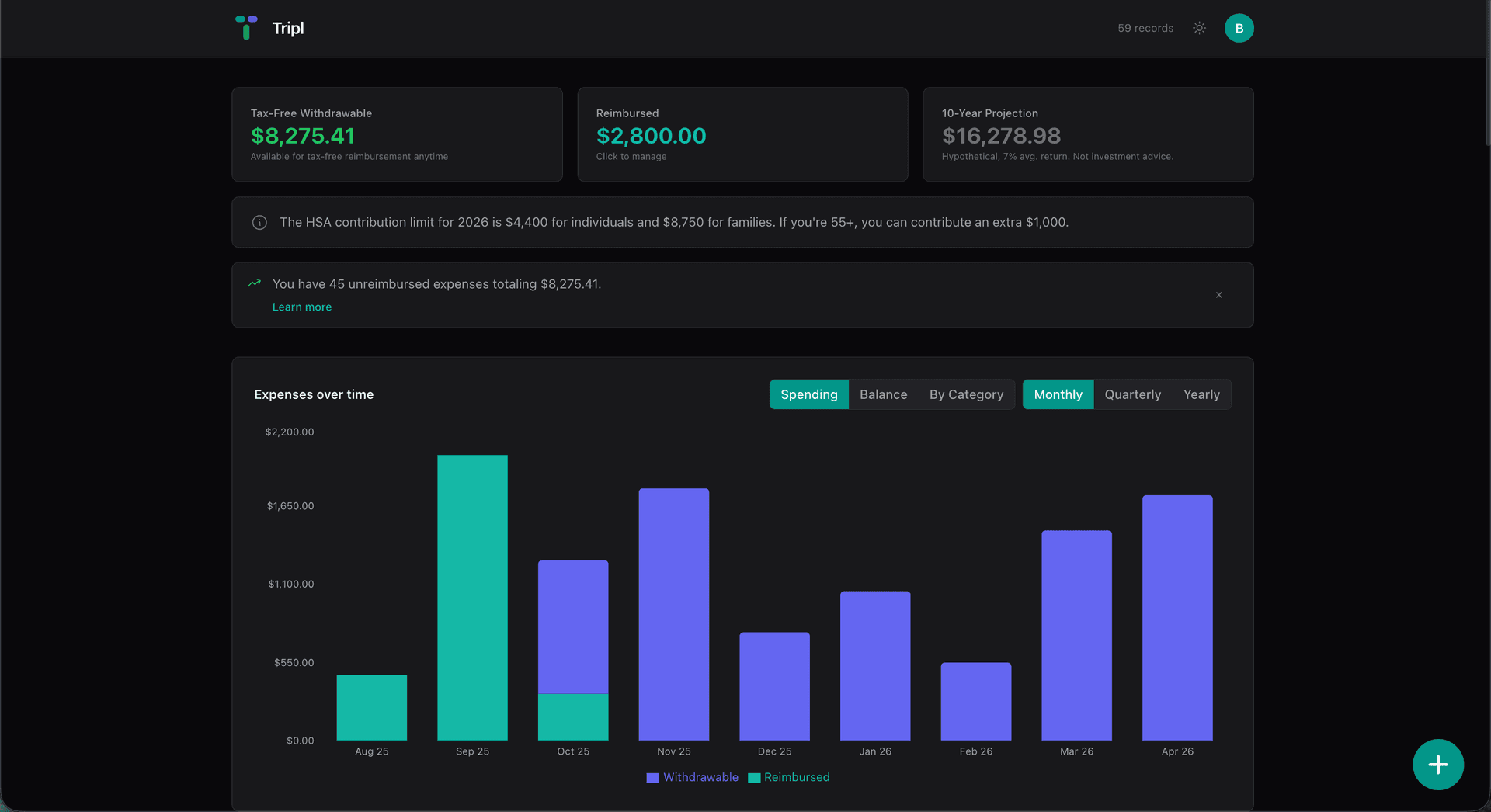
We paid our medical expenses from our regular checking account and let the HSA balance stay invested. Every dollar in that HSA is now growing tax-free. We have two years of receipts saved up, roughly $14,000 worth, that we can reimburse whenever we want. No deadline.
So not only did the HDHP cost less on a pure cash basis, it also gave us access to a wealth-building account that the PPO doesn't offer at all.
The mid-tier PPO has no equivalent. You pay your premiums, you pay your copays, and you get nothing back. There is no investment component, no tax advantage, no future reimbursement option. The money is just gone.
"But What If Something Really Expensive Happens?"
This is the fear that keeps people on higher-premium plans. What if someone needs surgery? What if there is a major emergency?
The HDHP has an out-of-pocket maximum. For family coverage in 2026, that cap is $17,000. Once you hit it, everything is covered at 100%. The PPO has a lower out-of-pocket max, but the difference in premiums means you are already paying extra every month for that protection.
Think of the premium difference as an insurance policy you are paying for but probably will not need. In our worst medical year (the year our youngest was born), we hit about $12,000 in total medical expenses. Even in that year, the HDHP came out ahead when you include the tax savings.
When the PPO Actually Wins
I am not going to pretend the HDHP is always the right call. If you have a chronic condition that requires frequent specialist visits and expensive ongoing prescriptions, the PPO's predictable copay structure might genuinely cost less. If you are planning a major surgery and know your costs will blow past the out-of-pocket max, the PPO's lower max could save you money.
But for most families, even families like ours that use healthcare regularly, the HDHP plus HSA combination wins. The premium savings and tax advantages are just too large.
Run Your Own Numbers
Take last year's medical spending. All of it. Every visit, every prescription, every lab, every imaging appointment.
Now compare what you would have paid under each plan option available to you. Don't forget to add the HSA tax savings to the HDHP column.
If you are in the 22% federal bracket and maxing out a family HSA, that is roughly $3,000 in tax savings that most people never factor in. For a lot of families, that single line item flips the entire comparison.
The HDHP is not just for healthy people who never see a doctor. It is for anyone willing to run the actual math instead of going with the plan that feels safest.
Ready to run the numbers for your own situation? Our health plan comparison calculator factors in premiums, deductibles, coinsurance, and HSA tax savings so you can see the full picture.
*This is educational content, not financial or tax advice. Consult a qualified professional before making decisions about your HSA.*